Hygiene Science
Why People 'Pretend Touch' Trash Cans (And Cause More Mess)
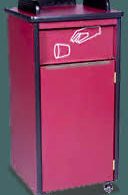
Stand near a public trash can in any restaurant or food court for ten minutes and watch what happens. You'll see a remarkably consistent pattern that researchers have documented but most people don't realize they're doing.
Almost no one fully opens the lid. Almost no one fully closes it after. The lid stays partly propped open, or it gets touched at the very edge with the back of a knuckle, or people just hover-toss their trash from a few inches away.
This is "pretend touch" behavior — using a trash can while trying to touch the lid as little as possible. It's everywhere, and it's responsible for most of the visible mess around public trash cans.
The behavior pattern
Watch the sequence:
Step one: person walks up to the can with trash in hand. They notice the lid is closed. They look at it. They visibly hesitate.
Step two: they make a decision. The decision tree branches into three paths:
Path A — they push the lid open with the back of their hand or a knuckle, drop trash, and walk away without closing the lid. The lid stays propped open by something, or it falls partway closed but doesn't fully seal. About 30% of users.
Path B — they hover-toss from above. They open the lid the minimum amount possible, throw the trash from a few inches away, and hope it goes in. Roughly 50% of users. This is where most of the mess comes from — trash that misses the bin and lands on the floor or on the can's exterior.
Path C — they grip the lid edge firmly with their fingertips, fully open the lid, drop trash, and lower the lid back down. About 20% of users. These are the users who treat the lid as touchable, but they're the minority.
Why this matters
The pretend-touch behavior pattern creates three downstream problems:
One, the floor around the trash can accumulates trash from misses. This is the immediate visible problem — restaurants, food courts, and public spaces have trash piled around the bins, not in them.
Two, the partly-open lid doesn't seal. Odors escape. Insects find their way in. The bin becomes unsanitary in a way it wouldn't be if the lid actually closed every time.
Three, the behavior is contagious. The next person walking up to the can sees that it's already gross-looking and adopts an even more cautious behavior pattern. Over the course of a busy day, the bin gets progressively worse-treated as the visual disorder accumulates.
The signal that's actually being sent
What pretend-touch behavior is communicating, behaviorally, is that customers don't trust the lid. They've assessed the surface and concluded it's contaminated enough that they want to minimize contact. They're right. The data on bacterial counts on public trash can lids supports their assessment.
This is useful framing because it explains why "ask people to close the lid" signage doesn't work. Customers aren't refusing to close the lid because they're rude; they're avoiding closing the lid because they don't want to touch it again.
The fix that actually works
Removing the contact deterrent solves the entire cascade. When the lid has a SafeHandle (or is otherwise touchable without contamination concern), the behavior pattern shifts toward Path C — full opens, full closes, no mess on the floor.
This isn't behavior change in the traditional sense — it's removing the barrier to the behavior people would prefer to do anyway. Customers want to use the trash can correctly; they just don't want to touch a contaminated surface to do it. Give them a non-contaminated surface to push, and the correct behavior emerges naturally.
Restaurant operators we've worked with have noticed this effect within a week of installing SafeHandles. The floor around the trash cans gets cleaner, the lids actually close, and the visible disorder cycle reverses. None of this requires staff intervention or signage. It just requires removing the friction that was driving the avoidant behavior.
Why home use shows the same pattern
Look at your own kitchen trash can. If you don't have something like SafeHandle on it, walk over and observe the lid. Are there fingerprint smudges on the front? Crumbs around the base of the can? Is the lid slightly open?
The pattern at home is the same as in public, just at lower volume and with a different audience (you and your family). Pretend-touch behavior in your own kitchen produces the same downstream problems — minor mess accumulation, lid not sealing, slightly-worse-than-it-could-be hygiene cascade.
The fix is the same: remove the deterrent and the correct behavior emerges automatically.
Ready to stop touching your trash can lid?
Preorder SafeHandle — From $16.95Read next: Trash Can Slip-and-Fall Hazards: The Hidden Liability for Businesses · The 12 Germ Hotspots in Your Kitchen (Trash Lid Ranks Higher Than You Think) · More about our product