For Businesses
Trash Can Slip-and-Fall Hazards: The Hidden Liability for Businesses
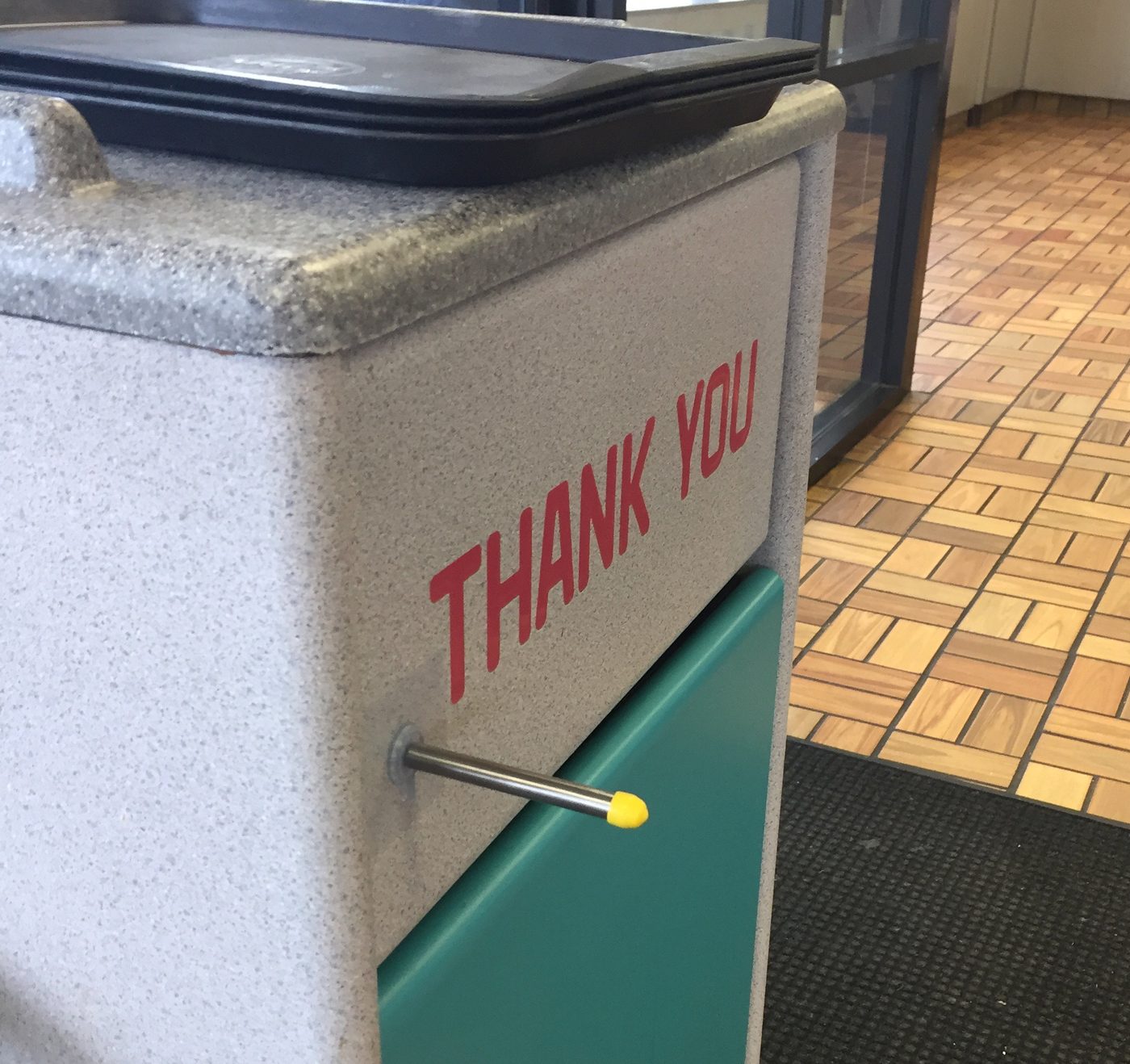
Most facilities managers don't think of trash cans as slip-and-fall liability sources. They think of wet floors, ice on entryways, and uneven flooring transitions. But the area around trash cans is one of the most under-recognized slip hazards in commercial spaces, and it's often the most preventable.
The cause is the pretend-touch behavior pattern from the previous article: customers and employees who don't want to touch the lid hover-toss their trash, miss the bin, and leave a trail of food, liquid, and packaging on the floor. Add normal kitchen and food-service spillage to that, and the area immediately around a trash can becomes a wet-and-greasy zone.
The liability math
Slip-and-fall is the leading cause of premises liability claims in the U.S. The average slip-and-fall settlement in 2024 was approximately $30,000-50,000 for moderate injury cases; severe cases (broken hips in elderly visitors, head injuries) can reach $500,000-2,000,000. For commercial operators, even one serious slip-and-fall claim can dramatically exceed the lifetime cost of any preventive intervention.
The key insight from premises liability law: the standard isn't whether the floor was clean at the moment of the incident. The standard is whether the operator should have known about the recurring hazard and taken reasonable preventive measures. When trash cans consistently produce floor mess and the operator hasn't addressed the cause, "we cleaned it last hour" is a weak defense.
Where it actually matters
The risk concentration varies by property type:
Restaurants and food courts — high traffic, high spill volume, customers carrying food and drinks. The floor near self-serve trash stations is often the slickest area in the entire restaurant.
Senior living facilities and healthcare — population is most vulnerable to slip-and-fall, and any fall is a potentially serious liability event. Trash cans in dining halls, common rooms, and nursing stations are real risk points.
Schools — both the slip risk for students and the accumulating mess around lunch trash stations create operational and liability exposure.
Office buildings — usually low spill volume but high consequence (well-resourced visitors, lawyer-friendly demographics).
Public spaces (transit, malls) — high traffic, vulnerable populations, professional plaintiff infrastructure.
The fix that costs less than one mop
Installing SafeHandles on every commercial trash can in a property is a small expense — typically $10-15 per can in volume. For a typical mid-size restaurant with 4-6 trash stations, total cost is $40-90. For a hotel or office building with 50-100 cans, total cost is $500-1500.
The benefit, beyond the slip-and-fall reduction: cleaner floor environment, better customer perception, reduced staff cleaning time, and a documentable preventive measure that helps in liability defense.
Compare to the alternative interventions:
Replace all cans with touchless models: $100-300 per can, plus battery costs, plus eventual motor replacement. For 50 cans: $5,000-15,000+. The slip-and-fall benefit is the same, but the cost is 10-20x higher.
Add more janitorial staff to constantly clean trash areas: ongoing cost, doesn't address the root cause, often misses incidents between cleaning rounds.
Add slip-resistant flooring near trash stations: capital expense, doesn't address the visual disorder, doesn't reduce ongoing mess.
SafeHandle is unique in the cost-effectiveness category — small upfront cost, no ongoing cost, addresses the root cause (pretend-touch behavior driving floor mess), and works with existing infrastructure.
Documentation for risk management
For facilities managers, an additional benefit worth noting: SafeHandle installation creates a documentable preventive measure. In the event of a slip-and-fall claim, having installed an industry-recognized hygiene/cleanliness intervention is part of demonstrating reasonable care.
This isn't legal advice — talk to your premises liability counsel for jurisdiction-specific guidance. But the general principle is that visible, documented preventive measures matter in liability defense, and SafeHandle qualifies as one for trash-can-related floor hazards.
For business owners considering this
The Bulk Orders page has volume pricing and a quote request form. For most properties, the entire trash can fleet can be SafeHandle-equipped for less than the deductible on a single slip-and-fall claim. The math is unusually clean.
Ready to stop touching your trash can lid?
Preorder SafeHandle — From $16.95Read next: The Antibacterial Yellow Tip: How SafeHandle's Tip Adds a Second Layer · Cross-Contamination 101: How Touching the Trash Spreads to Your Food · More about bulk pricing