Real-World Use
Restaurants and SafeHandle: Two Years of Real-World Testing
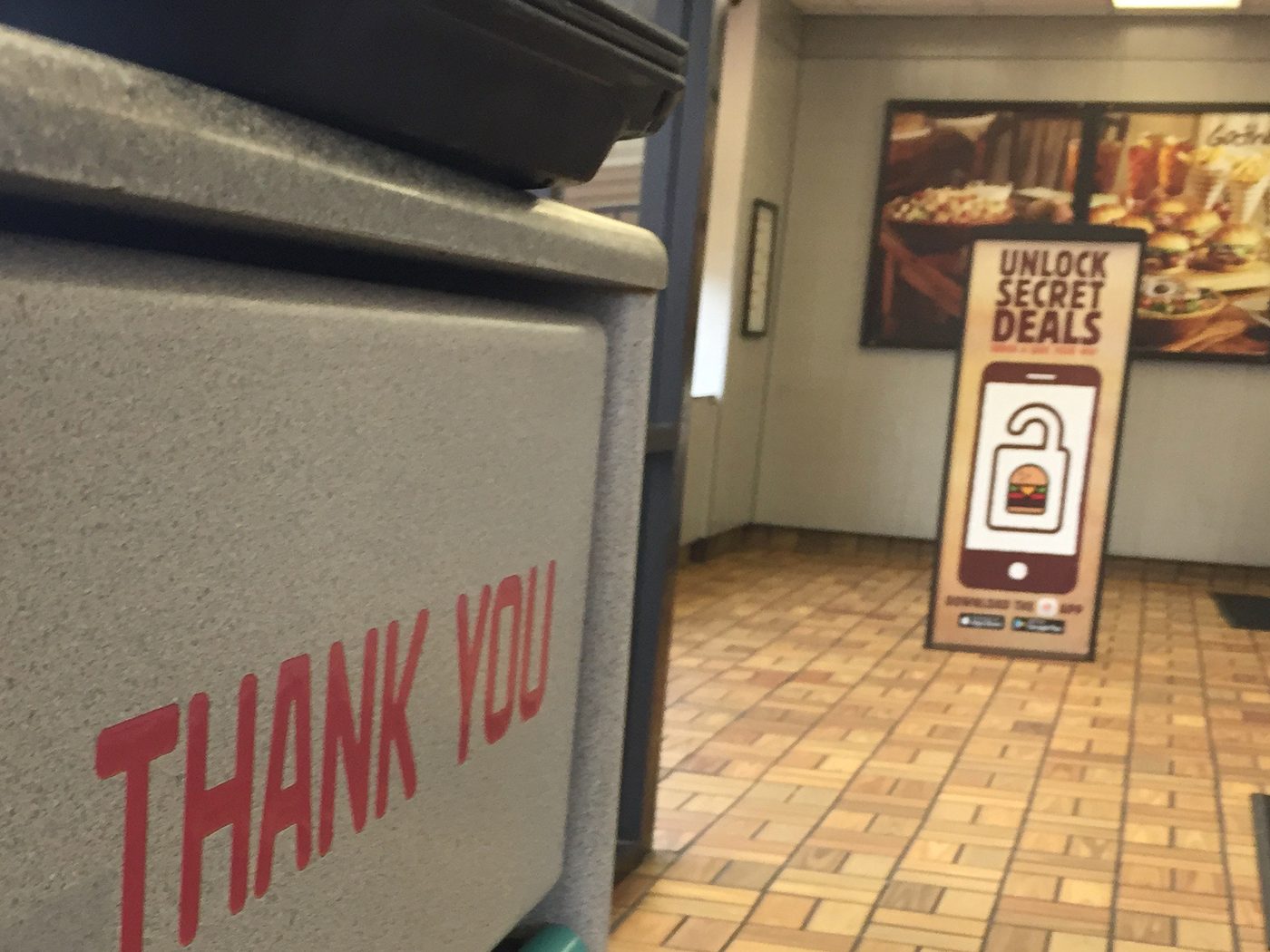
SafeHandle has been in active commercial deployment since 2024, primarily in food-service establishments around Delaware and Pennsylvania. Here's what we've learned from two years of real-world use in environments far harder than any home kitchen.
The deployment pattern
Our early commercial customers fell into a pattern: restaurants with high-traffic dining areas where customers self-bus their trays and use lobby trash cans. Burger King franchise locations, Casapulla's Deli, Brandywine Brewing, McDonald's. These environments have trash cans that get pushed open thousands of times a day, by hundreds of different customers, on lids that get cleaned maybe once a shift if at all.
The brief from these operators was simple: "We want our trash cans to be hygienic without spending all day cleaning them." SafeHandle was an easy sell because it required no operational change — install once, forget. Staff didn't need to learn a new procedure. Customers figured it out intuitively.
What worked
The adhesive holds. Across two years of installations, the most common failure mode is no failure at all — units installed in 2024 are still in use today. The handful of failures we've seen happened in the first 24-48 hours, generally because the lid wasn't cleaned thoroughly before installation. After that initial bonding window, the adhesive is stable.
The yellow tip survives. Push counts in restaurants we've measured are in the thousands per day. The yellow plastic shows wear over time but doesn't break. After 18 months in a high-volume location, the tip looks used but functional. We're working on quantifying the cycle count to failure, but the answer so far is "we haven't seen it fail yet."
Customers use it correctly. This was less obvious going in. Customers in busy restaurants have to figure out the handle on the fly with no instruction. The intuitive use rate has been roughly 95% — most people walking up to a SafeHandle-equipped trash can immediately understand they should push the yellow handle. The 5% who push the lid directly do so by habit but quickly self-correct on the second use.
What we've learned about installation
Surface preparation matters more than we initially documented. The lids in restaurants get a film of cooking grease that interferes with adhesion. We now recommend cleaning the lid with isopropyl alcohol (rubbing alcohol from any drug store) before installing, not just regular cleaning solution. This bumps the success rate from "90%" to "essentially 100%."
Temperature also matters. Installations done in cold environments (a refrigerated room, a delivery truck during winter) have lower initial bond strength. The adhesive cures properly above ~65°F. We recommend installation at room temperature.
Lid material affects the failure rate. Smooth plastic and metal lids work great. Textured plastic lids have a slightly higher failure rate (the adhesive can't get full surface contact). Wood lids work but require an extra-firm 60-second press. We haven't tested ceramic.
What surprised us
Customers commenting positively. We didn't expect customers to notice or care, but in several locations, customers explicitly mentioned the SafeHandle to staff as a positive feature. One restaurant operator told us a customer called the installation "the most thoughtful trash can I've ever seen."
Reduced floor mess around trash cans. This wasn't on our hypothesis list at all. The pattern that emerged: when customers don't want to touch the lid, they hover-toss their trash from a distance, which leads to misses, spills, and crud accumulating around the can. With a handle they can comfortably grip, customers fully open the lid and properly drop trash inside. Restaurants reported notable reduction in floor mess around trash stations within a week of installation.
Staff time savings. The same operators reported less time spent wiping down trash cans, because customer hands no longer touch the lid surface to leave grease and food residue. Cleaning frequency dropped from "constant" to "scheduled."
What we changed based on real-world use
The yellow tip color. Our original prototypes had a green tip. We switched to yellow because it stood out more clearly against the typical dark plastic of commercial trash can lids — making it more visually obvious to customers that there was something to push. Adoption rate noticeably improved with the higher-contrast color.
Adhesive formulation. We moved from a general-purpose pressure-sensitive adhesive to a higher-performance industrial formulation in 2025, after seeing the slightly elevated failure rate on textured plastic lids. The new formulation has performed as expected.
Packaging instructions. We expanded the install instructions to include the alcohol-cleaning step explicitly, which reduced install support requests notably.
What we're confident in for consumers
Two years of high-volume commercial use is a stronger validation than two months of home use would be. If SafeHandle survives a Burger King dining room, it will survive your kitchen. The wear patterns from home use are a fraction of what we've measured commercially, and the failure modes we've seen all happen quickly (in the first 48 hours) or essentially never.
This isn't a startup launching a product on Day One — it's a product that's been quietly proving itself in the harshest environment we could find for two years before opening up to consumers.
Ready to stop touching your trash can lid?
Preorder SafeHandle — From $16.95Read next: The Hidden Hazard of Public Trash Cans · SafeHandle vs. Touchless vs. Pedal: Which Solution Actually Works · More about SafeHandle