For Families
Kid-Friendly Trash: Teaching Hygiene Without Forcing Hand-Washing Battles
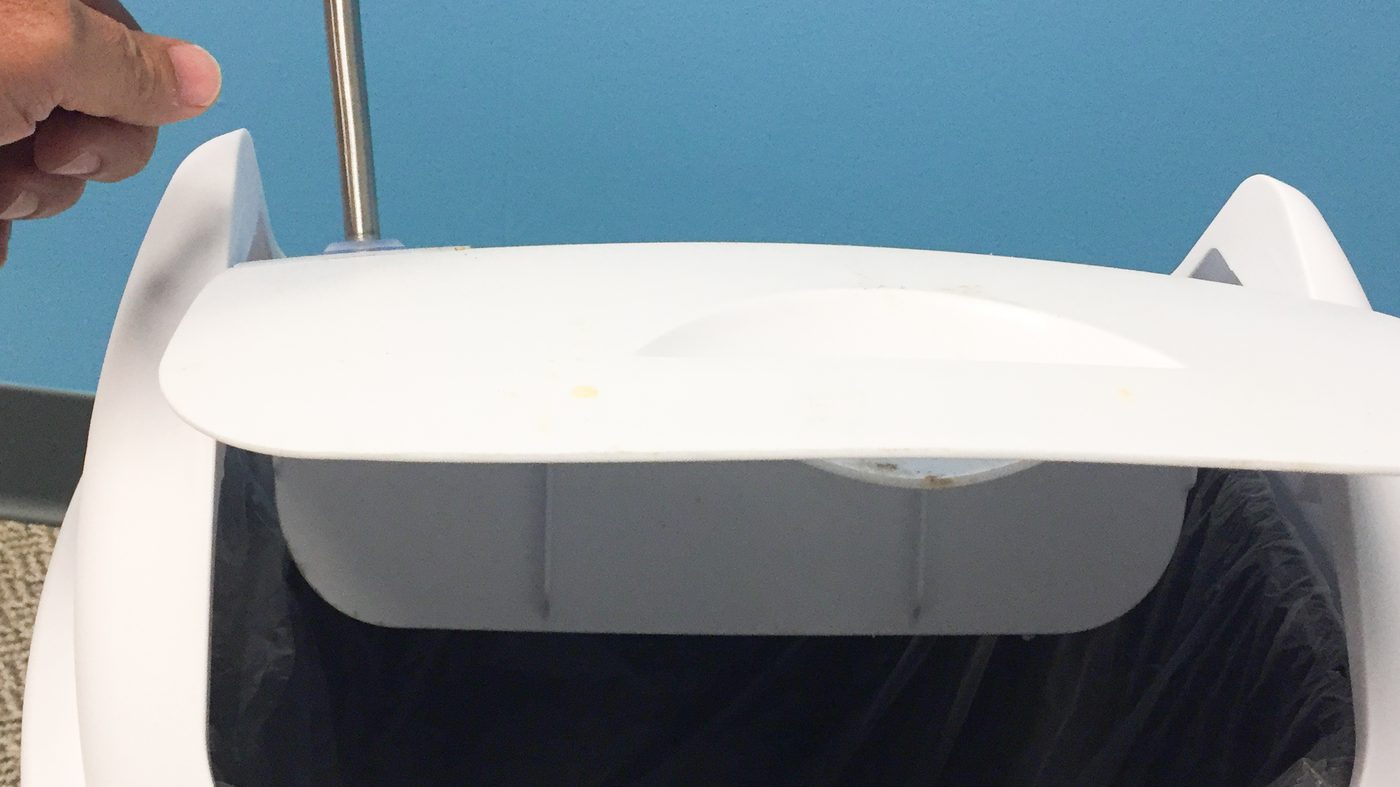
If you have kids in the four-to-twelve range, you've had this conversation many, many times. They drop a wrapper in the trash. They touch the lid. You say, "Wash your hands." They say, "I didn't even touch anything." Five minutes later they're eating goldfish crackers with the same hands.
This isn't a hand-washing failure on the kids' part. It's a trash-lid-design failure. Kids — and frankly, adults too — are accurate when they say they didn't touch "anything," because in their mental model, lightly pushing a lid isn't "touching." It's a casual interaction that doesn't register as a contamination event.
The hand-washing battle that follows is essentially asking kids to take a precaution against a risk they don't perceive. And kids are excellent at avoiding precautions against unperceived risks.
Why "just wash your hands" doesn't scale
Hand-washing for kids has three failure modes:
One, it has to happen every single time, not just sometimes. Kids touch the trash can a dozen times a day across snacks, cleanup, art projects, and incidental use. If they wash 80% of the time, that's still a meaningful contamination flow into the rest of the kitchen.
Two, kid hand-washing tends to be brief. Twenty seconds with soap is the standard, but the average kid wash is 5-7 seconds with minimal soap. Most pathogens require longer contact with surfactants to be removed.
Three, the cognitive load of "remember to wash" creates conflict and friction. Parents become enforcers, kids become avoiders, and the relationship becomes adversarial over a hygiene point that should be background infrastructure.
Why structural fixes work better
Hygiene research is consistent on a counterintuitive point: structural fixes (changing the environment so the right behavior happens automatically) outperform behavioral fixes (training people to do the right thing). This applies to adults and especially to kids.
For trash cans specifically, the structural fix is making the lid openable without touching the contaminated surface. SafeHandle does this. Touchless cans do this. Foot pedals do this. The mechanism doesn't matter — what matters is that the kid never touches the contaminated surface in the first place.
The downstream effect is that the hand-washing battle largely disappears for trash interactions. Kids who don't touch contaminated surfaces don't need to wash specifically because of trash use. (They still need to wash before meals and after the bathroom, but those are different prompts that work better as standalone rules than as bundled "and also after every trash interaction" extensions.)
Why kids actually like SafeHandle
This was a happy surprise from early home customer feedback: kids enjoy using SafeHandle. The yellow tip makes it visually obvious as something to interact with. The push action gives a small mechanical satisfaction (the lid swings open). It feels more like a tool than a chore.
Several parents reported that their kids started independently throwing away their own trash without prompting after SafeHandle was installed — a behavior that previously required reminders. The reduction in friction (no contaminated lid to touch) seemed to remove the subconscious resistance that had been there before.
For families managing kid hygiene, this is a genuinely useful product — not because it teaches anything, but because it removes a specific friction point in a way that lets normal kid behavior produce hygienic outcomes by default.
The under-five crowd
For toddlers, SafeHandle works slightly differently. Toddlers don't have the dexterity or strength to use SafeHandle reliably (the rod is at adult-arm-height and requires a moderate push). What SafeHandle does for the toddler-and-young-child age range is reduce contamination on parent hands, which then reduces parent-to-child transfer.
This is less direct but still meaningful. Parent hand contamination is a major route for infant and toddler exposure. Reducing the parent's contact with the trash lid reduces what the parent then transfers to the child via shared surfaces, food prep, or direct contact.
The broader pattern
Kid hygiene works best when the environment is designed to make the right behavior the path of least resistance. "Wash your hands every time" is high-friction. "Push a yellow handle and your hand never gets dirty in the first place" is low-friction. Same outcome, vastly different ease of compliance.
Pick the version that doesn't require you to have the same conversation eight times a day for the next decade.
Ready to stop touching your trash can lid?
Preorder SafeHandle — From $16.95Read next: Elderly Hygiene: The Underrated Hazard of Trash Can Lids · 10 Spots in Your Kitchen You're Forgetting to Clean · More about our product